
What Does a Diagnosis of Dysgraphia Mean for Your Child?
In Translational Pediatrics, Chung, Patel, and Nizami (2020) define developmental dysgraphia as “a disorder of writing ability at any stage, including problems with letter formation/legibility, letter spacing, spelling, fine motor coordination, writing, grammar, and composition” affecting between 10% to 30% of children.
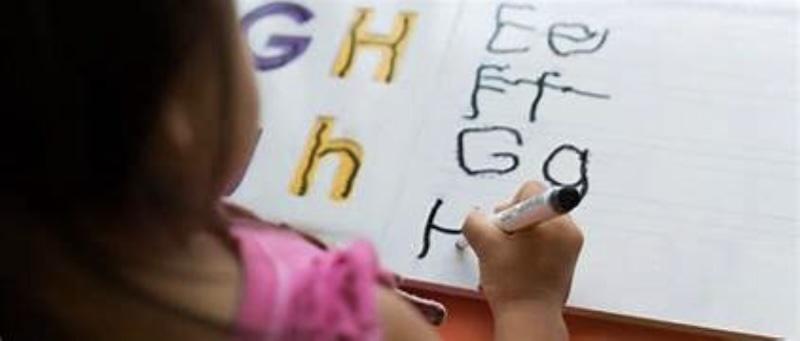
According to the Diagnostic and Statistical Manual, dysgraphia falls under a "Specific Learning Disorder” (SLD) with impairment in written expression (APA, 2021). Students with SLD in written expression may also carry a diagnosis of Developmental Coordination Disorder (DCD) or dyspraxia.
Students with dysgraphia often struggle with:
- Visual-spatial skills (letter discrimination, spacing, staying within margins)
- Fine motor skills related to handwriting (grip, letter forms, fatigue, illegibility, switching between cursive and print)
- Language and information processing (what to write, self-checking, word finding, sentence completion, written comprehension, syntax)
- Working memory (organization of thought) (Chung, Patel, & Nizami, 2020)
There are tremendous overlaps between those areas of challenge and those associated with DCD/dyspraxia, dyslexia, and Developmental Language Disorders, leading to difficulties truly quantifying the prevalence of writing difficulties in school-age children.
When supporting students with writing difficulties in the classroom, it is important to consider accommodations, modifications, and scaffolds.
Common modifications include:
- Changes in assignment length or the number of problems to be completed
- Changes in font and size of instructional materials
Common scaffolds include:
- Teacher provided outlines
- Direct and explicit multisensory instruction in spelling, letter formation, and the writing process
For educators working with dysgraphic students, it is important to be aware of the breadth of difficulties that may appear in students with the same clinical diagnosis.
DVFriends faculty have experience and expertise in supporting students across a range of language-based learning differences including dysgraphia.
If you are unsure if DVFriends serves your student's learning profile, please contact the Admissions Office to speak to Jim Miller or Kavitha Patel.


Kavitha Patel
Assistant Director of Admissions, Director of Financial Aid
(610) 640-4150 x2120
Assistant Director of Admissions, Director of Financial Aid
(610) 640-4150 x2120